Tight spaces and what they may do to odor
- IfParked close to a fence or wallThenAirflow is reduced and moisture lingers; leave a gap if possible.
- IfParked beside a house under an eaveThenWater may drip or pool at the roof edge; check the roof sealant.
- IfShared lot with other vehiclesThenDust and exhaust can reach the rig; keep seals in good shape.
- IfGarage or tight carportThenStill air and stored items nearby may add smell; ventilate.
- IfParked on gravel or dirtThenDust enters easily; check door seals.
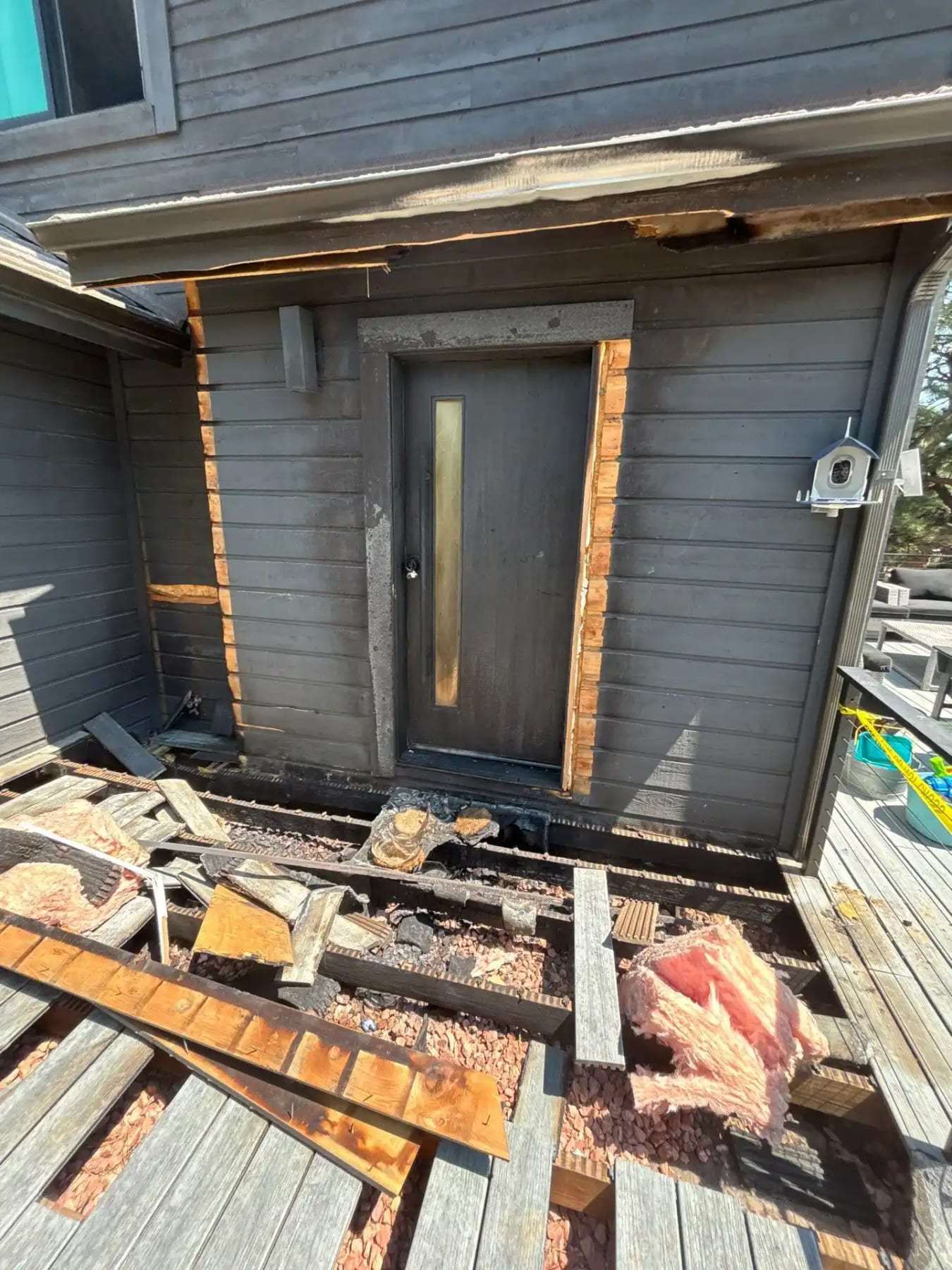
Deck boards removed at an exterior door to expose rotted framing. Shown to illustrate the work described; not a job for this site or at any address named here.
Inner suburbs tend to have smaller lots and tighter parking, which can mean less airflow around a stored rig. A trailer pushed close to a fence or a wall may stay damp on one side for days after rain. A motorhome parked beside a house may have shade that keeps one side wet. The same smell that would be minor in an open lot can become more noticeable when the rig is closed in.
This page makes no statement about particular streets, rules or facilities. It only suggests that owners in closer-in areas think about airflow, drainage and shared surroundings. If your parking is regulated by the city or an association, check the current rules yourself.
Owners in compact neighborhoods sometimes find that a neighbor's activity affects the rig, such as cooking smells or smoke drifting across a fence. If a smell enters through open vents, closing them when you are not using the rig is easy and free. For smell that is already inside, do not assume the neighbor is the cause. Run the same checks you would anywhere else, since the usual sources such as damp cushions, drains and food residue are still the most common.
Checks for compact parking
- Leave a few inches of airflow between the rig and any wall.
- Look at the ground beneath for pooled water.
- Clean gutters and roof edges where debris collects.
- Open vents on dry days if rain protection allows.
- Check seals after any storm.
- Remove food and trash before closing up.
Reminders
- Local rules
- Confirm any parking or storage rules with the proper authority
- Source first
- Locate water or animals before treating smell
- Record
- Photograph and date stains and smells
Common questions
Is a cover helpful in tight spaces?
A breathable cover can protect from sun and debris, but a non-breathable cover can trap moisture.
Should I rely on a dehumidifier?
If you have safe power and drainage, it can help. It does not remove a leak.
General information for the Denver area, not a quote or professional advice. In an emergency, call 911.