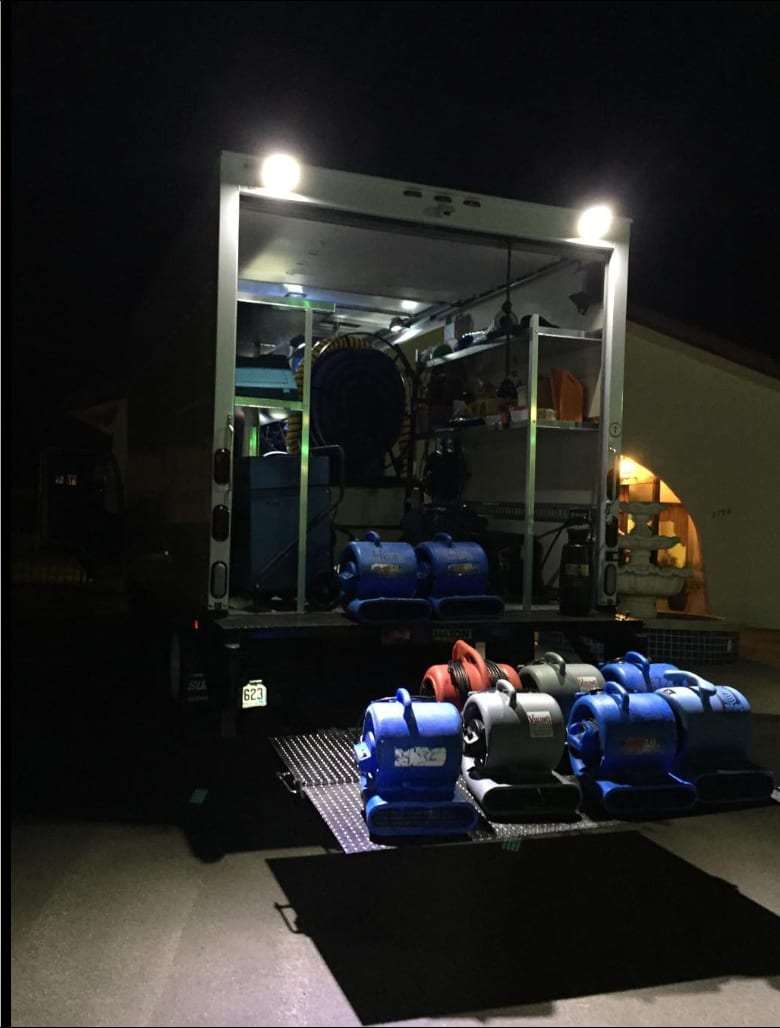
Truck-mounted unit and air movers on a liftgate at night. Shown to illustrate the work described; not a job for this site or at any address named here.
Tobacco smoke leaves oily residue that clings to plastic, glass and cloth. Campfire smoke carries a different, more woody scent and drifts in whenever windows are open near a fire pit. Wildfire smoke can enter through vents and door seals and settle on everything. Each leaves its own fingerprint, but the way it behaves inside an RV is similar: porous surfaces hold the smell, and warmth makes them give it back.
A motorhome packs a lot of porous material into a small space. Cushion foam, mattress layers, ceiling fabric and carpeted cab areas all act like sponges, and the air handling system moves smoke-laden air across them every time the fan runs.
Buying a used motorhome from a smoker's household is the most common way people meet this problem. The listing may say nothing, the showroom may be aired out, and the smell shows up only after a hot afternoon. A careful buyer asks to see the unit closed up and warm, smells the headliner and cushion bases, and checks the filter. Ask what the previous owner did about the smell, since a heavy scent product can mask a problem for a short time.
Tobacco smoke versus outdoor smoke
The two behave differently when you try to clean them.
Tobacco smoke
- Leaves a sticky film on hard surfaces
- Penetrates foam and headliner over time
- Often strongest on warm days
- Can darken ceiling fabric and glass
Campfire or wildfire smoke
- Usually lighter and woody
- Concentrates on fabric that was exposed
- Can fade with airing and laundering
- May return if filters or ducts took it in
Places smoke hides in a motorhome
- Cab headliner and sun visors
- Seat foam under covers
- Cabinet liners and drawers
- Curtains and shades
- Return-air filter and duct runs
- Carpet edges beneath furniture
A sensible order of work
Work from the easiest and cheapest surfaces toward the most invasive, and stop to re-smell between stages.
Remove washables
Launder curtains, pillows and bedding according to labels.
Clean hard surfaces
Wipe glass, plastic and cabinet fronts to lift the film.
Address fabric
Extract or deep-clean upholstery and carpet where the material allows.
Deal with air handling
Replace filters and consider whether ducts need attention.
Reassess after warm weather
Check again on a warm day before deciding what is left.
Common questions
Is leather easier than cloth?
Smooth surfaces usually clean more easily than fabric, but seams and foam beneath can still hold smell.
Does an ozone machine solve it?
Opinions vary and results depend on the situation. Ozone can affect rubber and plastics and is not safe to breathe, so ask a provider about precautions before agreeing.
General information for the Denver area, not a quote or professional advice. In an emergency, call 911.